
All On Four and All On Six
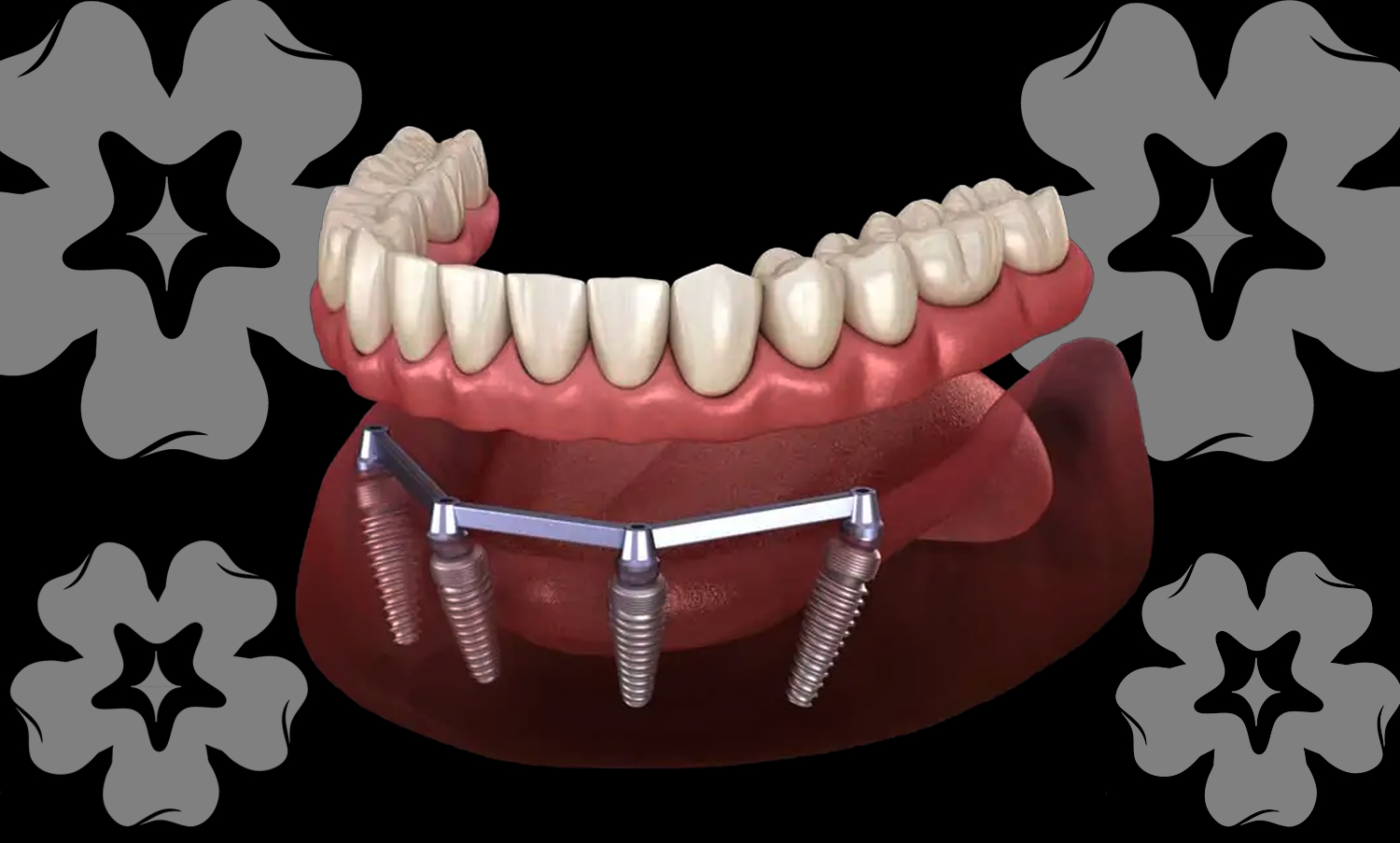
What Are All On Four and All On Six Implant Techniques? What Do They Mean? How Are All On Four / All On Six Implants Done? Advantages of All On Six and All On Four Implant Treatment
The “All-on-4” and “All-on-6” implant techniques are fixed prosthetic treatment methods used by dentists for patients with complete tooth loss. These implant treatments are designed to restore missing teeth permanently while enhancing the strength of the jawbone. The advantages of All On 4 and All On 6 implants include their durability and long-lasting results. For those who want to replace their lost teeth with natural-looking dental implants, these techniques can be a better option than uncomfortable dentures and bridges, as they offer improved performance.
So, what exactly are All On Four and All On Six Implant techniques? What are the advantages and disadvantages of All On Four / All On Six implants?
All On Four and All On Six implants are commonly asked about by individuals who want to replace missing teeth with dental implants. These techniques have been considered the gold standard in dental treatment for the past 20 years, offering both aesthetic and functional solutions that significantly enhance patients’ quality of life.
While both All On 6 and All On 4 implants aim to achieve similar results, some key differences may lead a dentist to prefer one over the other. Here’s a detailed explanation of All On Four and All On Six implants.
What Do All On Four and All On Six Implants Mean?
Dental implants are a treatment option for tooth loss, which negatively affects important functions such as aesthetics, speech, and eating. Traditional dentures often fall short of providing patient satisfaction. In these cases, the “All On Four” and “All On Six” techniques offer better solutions for patients with complete tooth loss. In All On 6 and All On 4 dental implant treatments, implants are anchored to the jawbone, and a fixed prosthesis is placed over them. This way, patients are freed from the problems caused by removable dentures and achieve a more natural tooth structure.
What Is All On Four Implant?
The All On Four implant technique involves placing a full prosthesis supported by just four implants. Offering better performance than uncomfortable dentures and bridges, the All On Four implant procedure uses four strategically placed dental implants to support a complete set of prosthetic teeth. This method is particularly useful for patients who have lost all their teeth. The implants are placed at specific angles to maximize the stability and support of the prosthesis, offering a long-term, reliable solution for tooth replacement.
How Is the All On Four Implant Technique Applied?
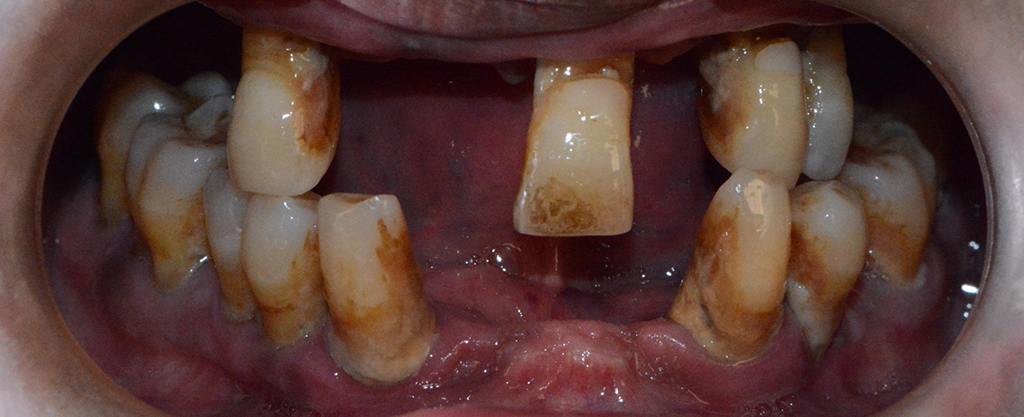
How is All On Four treatment performed? This is another common question for patients who are considering implants but have concerns. In All On Four treatment, a detailed clinical and radiological examination of the patient must first be conducted. Measurements are taken using a CT scan, and a personalized plan is created. Four implants are placed into the jawbone, usually two on the upper jaw and two on the lower jaw. This placement is typically done under local anesthesia. After the implants are placed, a temporary prosthesis is usually made immediately, ensuring the patient does not remain toothless.
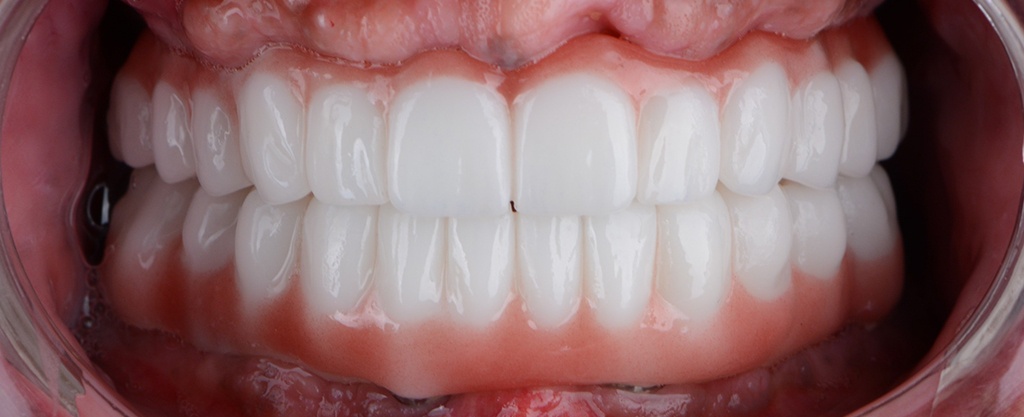
The healing process typically takes 3 to 6 months for the implants to fuse with the jawbone. During this time, the jawbone integrates with the implants. Once the healing is complete, permanent dental prostheses are prepared and fixed to the implants. The permanent prosthesis mimics the appearance and function of natural teeth. The All On Four method is commonly preferred for patients with insufficient jawbone, as the implants are placed at special angles to provide stability even with limited bone.
Who Are All-on-4 Implants Suitable For?
All-on-4 implants can be an ideal solution for individuals with low bone density. Additionally, they are suitable for those looking for a quicker, less invasive option.
What is All-on-Six Implant and How Is It Applied?
All-on-Six dental implants, like the All-on-4 method, are used to place fixed dental prostheses in place of missing teeth. This technique provides a more comfortable, long-lasting smile by placing a total of six implants into the upper or lower jaw. In the All-on-Six technique, as with All-on-Four, the patient’s jawbone condition is evaluated, typically through X-rays and CT scans. Then, measurements for the implants and prosthesis are taken. Your dentist will place six implants into your jawbone, typically in the form of titanium screws. The implants are usually placed at angles in the back areas to provide more support. This procedure is generally performed under local anesthesia, though sedation may also be used in some cases.
After the implants are placed, the healing process begins as the jawbone fuses with the implants (osseointegration). This process may take several months, during which a temporary prosthesis may be applied. Once the waiting period is over, permanent dental prostheses are attached.
Who Is Suitable for the All-on-Six Implant Technique?
This method is suitable for patients with sufficient jawbone or those who do not require additional procedures like bone grafts. Given the biting and chewing mechanics, the All-on-Six technique provides better pressure distribution, which extends the lifespan of the implants.
All-on-Six implants are ideal for patients with good bone structure seeking a more durable solution.
Differences Between All-on-Four and All-on-Six Techniques
In the All-on-Six treatment, six implants are placed in either the upper or lower jaw, which allows for more even distribution of forces and typically helps the jawbone provide better support.
In the All-on-Four treatment, four implants are used, typically placed in the front portion of the jaw. This method may be more suitable for patients with weaker jawbones, as four implants are used to support all the teeth.
Both techniques are suitable for patients with complete tooth loss, but the choice depends on the jawbone structure and the patient’s specific needs.
Advantages of All-on-Four Implants
The All-on-Four implant technique has several advantages, including cost, fast treatment, and a natural appearance. The advantages of All-on-Four implants for patients with missing teeth are as follows:
•The procedure is faster and shorter since only four implants are used.
•Implants are typically placed in strong areas of the jawbone, which may reduce or eliminate the need for bone grafts in some patients.
•It is a quick and effective treatment method. After the implants are placed, temporary teeth can be attached shortly, preventing patients from remaining toothless.
•The All-on-Four technique involves fewer surgical interventions.
•The prostheses restore the appearance and function of natural teeth, providing cosmetic comfort.
•This method restores the function of natural teeth, improving chewing and speaking abilities.
Disadvantages of All-on-Four Implants
Despite its comfort and efficiency, the All-on-Four technique has some potential disadvantages, which are often discussed by patients. These include:
•All-on-Four may require sufficient bone density in some cases. For patients with low bone density, this technique may not be suitable or may require additional bone grafting.
•In some patients, All-on-Four may not provide sufficient long-term support, which can affect the success of the implants.
•All-on-Four can be more challenging and require a more complex treatment process in cases of extensive tooth loss, large gaps, or complex jaw structures.
•While four implants generally provide sufficient support, in some cases (particularly for patients with high chewing forces), additional support may be needed. In such cases, All-on-Six implants may be more appropriate.
•While All-on-Four may be more affordable compared to some other implant techniques, it can still be relatively expensive compared to other dental treatments.
Advantages of All-on-Six Implants
The All-on-Six implant technique offers several benefits, including:
•A fixed dental prosthesis can be applied with a single surgical procedure.
•All-on-Six implants generally do not require advanced surgical procedures, such as sinus lifts or bone additions, making the operation simpler.
•It provides a customized aesthetic appearance and smile line.
•The treatment duration is relatively short.
•Compared to traditional dental implants, All-on-Six prostheses are easier to clean and maintain.
•Suitable for patients who cannot use removable dentures or have a gag reflex.
•Its design differs from full dentures, making it easier to get used to as it does not cover the roof of the mouth.
Disadvantages of All-on-Six Implants
The disadvantages of All-on-Six dental implants may vary depending on the patient and can include:
•All-on-Six implant treatment is generally more expensive than other dental implant methods. This can be a significant financial burden for patients, especially since the procedure is typically not covered by health insurance.
•The healing process may take several months after the placement of the implants, during which patients may need to live with temporary teeth.
•As with any surgical procedure, All-on-Six implants come with risks such as infection, bleeding, or healing complications.
•Sufficient jawbone support is necessary for successful treatment. Patients with insufficient bone structure may require additional procedures (such as bone grafting).
Technology and Advancements
With the advancement of technology, both All-on-Four and All-on-Six techniques have improved. Digital planning (3D imaging, digital planning software), computer-guided surgical templates, nanotechnology, advanced materials, digital simulations, and CAD/CAM technology all contribute to the more accurate and reliable application of implants. These technological advancements have increased the success rate of All-on-Four and All-on-Six implant systems while enhancing patient comfort. Your dentist will evaluate how these technologies can best serve your specific needs.
Are All-on-Four and All-on-Six Implants Long-Lasting?
When well-maintained, All-on-Four and All-on-Six implants can last between 10 to 20 years or longer. However, the longevity depends on personal care and overall health. Regular brushing, flossing, and professional cleanings can extend the life of the implants and prostheses.
Regular check-ups with your dentist are essential for identifying potential problems early and addressing them.
Post-Treatment Care for All-on-Four and All-on-Six Implants
After treatment, the longevity of dental implants depends on the patient’s maintenance. Practices such as brushing, using dental floss, antibacterial mouthwash, eating soft foods, maintaining a balanced diet, avoiding excessive pressure, and refraining from smoking and heavy alcohol consumption are crucial for the longevity of All-on-Four and All-on-Six implants.
Your dentist will provide more detailed care instructions tailored to your specific needs.
All-on-Eight Technique
All-on-Eight is an implant treatment used for full arch dental prostheses. In this technique, eight implants are placed into the upper or lower jaw to support a fixed prosthesis. All-on-Eight offers a more natural and permanent solution for patients who have lost their teeth, similar to All-on-Four and All-on-Six. This method is typically chosen for patients with a wide mouth or those with high bone density. It provides a more guaranteed, longer-lasting solution compared to the six-implant technique.
Advantages and Features of All-on-Eight:
•Stability: Eight implants offer more stability compared to methods that use fewer implants (such as All-on-Four or All-on-Six).
•Bone Density: This method is recommended for patients with adequate bone density in the jaw.
•Fixed Prosthesis: The prosthesis attached to the implants functions like natural teeth, enhancing chewing and speaking ability.
•Durability: With proper care, All-on-Eight implants can last many years.
For more detailed information and to determine the most suitable treatment for you, feel free to contact us.